













 Dog
 Cat
 Sign In
 Create Account


Key Takeaways
- No single food is right for every dog. Veterinarians consider nutritional adequacy, formulation expertise, quality and safety standards, and the individual dog’s needs.
- Each veterinary claim has a distinct meaning. “Veterinarian recommended,” “veterinarian formulated,” and “veterinarian approved” should not be treated as interchangeable.
- Transparency helps pet parents evaluate a food. Look for information about formulation, nutritional adequacy, ingredient sourcing, and quality control.
I’m Dr. Moran Tal-Gavriel, DVM, DVSc, Dip. ECVN. As Open Farm’s in-house board-certified veterinary nutritionist and Head of Veterinary Nutrition, I oversee recipe development and formulation decisions alongside a multidisciplinary team that includes Ph.D. and board-certified companion animal nutritionists, food scientists, and veterinarians. Together, we bring expertise in animal nutrition, veterinary medicine, ingredient interactions, processing, food safety, and quality control to the pet food formulation process.
One question I’m often asked is: What dog food do veterinarians recommend? The short answer is that there’s no single food that’s right for every dog. For most healthy dogs, I generally recommend a complete and balanced food appropriate for the dog’s life stage, while a dog’s individual health needs may call for a different option or more customized guidance from a veterinarian.
With so many claims about ingredients, benefits, and veterinary involvement, choosing a food for your dog will take more than just a quick look at the front of the bag. In the sections below, we walk through the information behind the label, from nutritional adequacy and formulation to testing, quality control, transparency, and veterinary claims, so you can make a more informed choice for your dog.
What Do Veterinarians Look For in Dog Food?
Nutritional needs vary depending on a dog’s life stage, size, activity level, body condition, and health. A healthy puppy, an active adult dog, a senior dog, and a dog managing a medical condition all need different things from their food.
For most healthy dogs, veterinarians generally recommend a food that is complete and balanced for the dog’s life stage. This means the recipe is intended to provide all the essential nutrients the dog requires, in appropriate amounts and proportions, when fed as directed.
However, whether a food is complete and balanced is only one consideration. Veterinarians may also look at:
- Who formulated the recipe and what nutritional expertise they bring
- Whether the nutritional adequacy statement matches the food’s intended use
- How the ingredients and finished recipe are tested
- Whether the manufacturer follows strict food safety and quality-control practices
- How transparent the company is about its sourcing, formulations, and processes
- Whether the food is appropriate for the individual dog
These considerations are also consistent with guidance from the World Small Animal Veterinary Association (WSAVA), which encourages pet parents to ask who formulates a company’s diets, whether it employs appropriately qualified nutrition experts, how it manages quality control, and whether it provides nutritional adequacy and calorie information. WSAVA does not approve or certify pet-food brands. Its guidance provides practical questions pet parents and veterinarians can use when evaluating them.
Why Does Transparency Matter?
Transparency gives pet parents and veterinarians access to the information they need to assess whether a recipe is appropriate for their individual pet. That starts with making required information, such as nutritional adequacy statements, calorie content, and nutritional composition, easy to find. It can also include information that goes beyond those requirements, such as ingredient sourcing, testing information, and clear answers about how recipes are formulated and produced.
No company can fit every detail on the front of a package. However, it should make important nutritional and safety information accessible and be prepared to answer questions about its food. Transparency ultimately helps pet parents verify claims and make more informed decisions.
Our Transparency Tool allows pet parents to trace ingredients back to the geographic source, view lot-specific safety test results, and find information about third-party certifications. Combined with the nutritional adequacy statements, calorie content, and other nutritional information provided on our product pages, these details give pet parents a clearer basis for evaluating a food than the language on the front of the package alone.
What Does Nutritional Adequacy Mean?
A nutritional adequacy statement is one of the most useful places to start when evaluating a dog food. It identifies whether the recipe is complete and balanced or intended for intermittent or supplemental feeding. It also specifies the species and life stage the food is intended for.
For most healthy dogs, this generally means choosing a complete and balanced food appropriate for their life stage. Puppies, for example, have different nutritional requirements than adult dogs, and large-breed puppies have additional nutritional considerations during growth.
Every Open Farm recipe includes a nutritional adequacy statement on both its packaging and product page. This helps pet parents understand whether the recipe is complete and balanced according to the Association of American Feed Control Officials (AAFCO) nutrient profiles, or intended for intermittent or supplemental feeding, as well as the species and life stage it’s appropriate for. At Open Farm, we develop recipes to provide complete and balanced nutrition and formulate them to meet the applicable AAFCO nutrient profiles.
The key is to read the nutritional adequacy statement carefully and confirm that the recipe’s intended use matches your dog’s needs. If your dog has a health condition or specialized nutritional requirements, your veterinarian can help you determine the best option.
Why Isn’t the Ingredient List Enough?
Ingredients matter. Their quality, nutritional purpose, and how they are sourced are all relevant when evaluating a recipe. However, an ingredient list cannot tell you everything about the finished recipe.
For example, the list does not explain the amount of each nutrient in the finished recipe, how the ingredients interact, how processing may affect them, or whether the finished recipe consistently meets its nutritional targets. It also does not tell you what testing or quality-control procedures the manufacturer follows.
Terms such as “holistic” or “natural” don’t clearly distinguish whether a food is nutritionally appropriate on their own. These terms may help describe a recipe, but the claims being made should be supported by evidence and considered alongside more detailed nutritional and safety information.
Rather than evaluating a recipe based on one ingredient or claim, consider:
- How the complete recipe was developed
- What each ingredient contributes
- What the recipe is intended to provide
- Whether the company can back up the information it shares
Why Does Quality Control Matter?
A carefully developed formulation must also be produced safely and consistently. Strict quality control helps protect ingredient integrity, nutritional consistency, and finished-product safety from sourcing through production.
Useful questions to ask include:
- What standards must the company’s suppliers and manufacturing facilities meet?
- Are ingredients and finished products tested?
- Does the company use a test-and-hold process before releasing products?
- Are its food safety systems independently certified?
- Can ingredients and finished recipes be traced through the supply chain?
At Open Farm, our quality standards extend from sourcing through finished-product testing. We partner with meat suppliers that meet third-party animal welfare standards, and our animal proteins come from USDA-approved facilities that follow biosecurity protocols and operate under government veterinary oversight.
We also work with specialized manufacturing facilities that are vetted against our standards and maintain globally recognized food-safety certifications. Finished products go through a test-and-hold process and are not released until independent third-party laboratory testing confirms they meet our safety and nutritional standards.
These processes matter because the food in the package must consistently reflect the formulated recipe.
What Does Vet-Formulated Dog Food Mean?
A “veterinarian-formulated” claim indicates that a veterinarian played a role in formulating the recipe. In practical terms, this means considering the nutrients provided by each ingredient, the amount of each ingredient used, and how those nutrients work together to meet the recipe’s nutritional requirements and goals.
It’s important to distinguish between a recipe formulated by a veterinarian and one formulated by a board-certified veterinary nutritionist. Veterinarians receive broad training in nutrition as part of their veterinary education, but the depth and focus can vary. Developing pet food formulas requires additional expertise in nutrient targets, ingredient interactions, processing, and nutrition for specific life stages or health conditions.
Board-certified veterinary nutritionists complete advanced training focused on clinical nutrition, disease management, research, and formulation. That specialized training helps them ensure that a complete and balanced diet provides the right nutrients, in the right amounts, for a pet’s life stage or health needs.
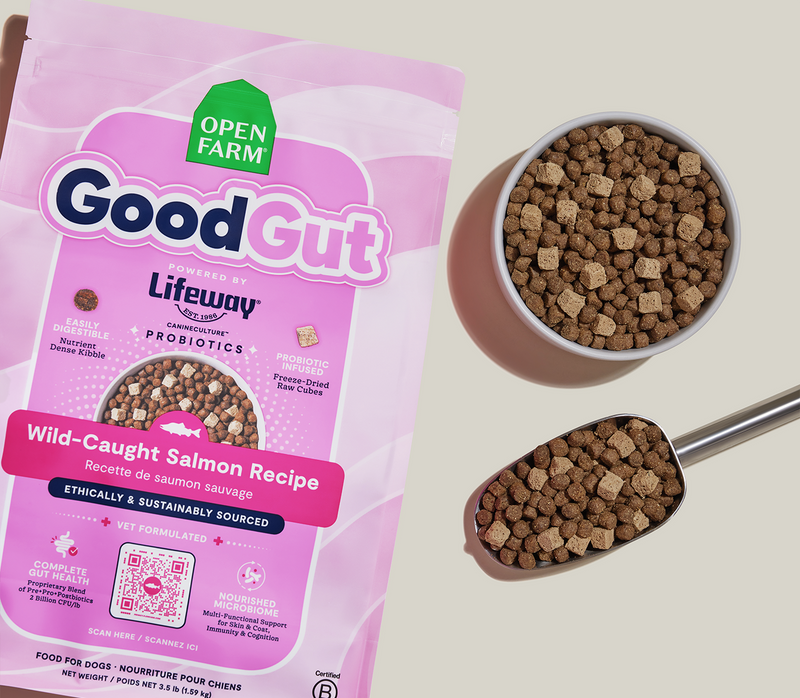
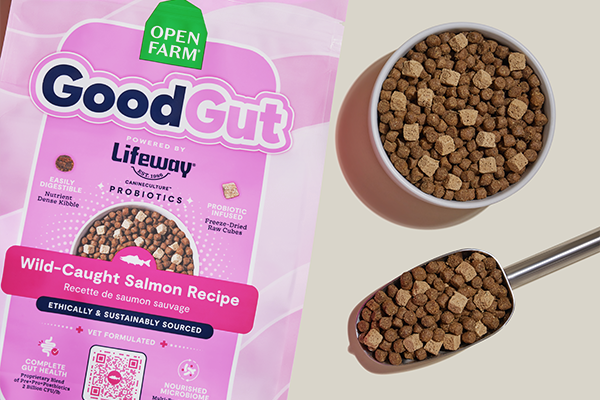
That distinction is important when evaluating a veterinarian-formulated claim. At Open Farm, I substantiate this claim through my direct involvement as a board-certified veterinary nutritionist in developing our GoodGut Dog Kibble recipes. I formulated these recipes to support overall digestive health. They provide complete and balanced nutrition for all life stages and combine prebiotics, probiotics, and postbiotics to support a healthy microbiome, skin and coat, digestion, and immune system.
Knowing who formulated a recipe and how involved they were is an important part of evaluating a vet-formulated dog food. Here are a few questions to ask yourself while choosing one:
- Who formulated the recipe?
- What nutritional training and qualifications do they have?
- How were they involved in developing the recipe?
- Do they remain involved in ongoing nutritional decisions?
The more clearly a company can answer these questions, the more credible and trustworthy the claim becomes.
What Is the Difference Between Vet Formulated, Vet Recommended, and Vet Approved?
These terms may sound similar, but they have different meanings and regulatory requirements.
In the United States, pet-food labeling is overseen at both the federal and state levels. The Food and Drug Administration (FDA) requires food to be safe, produced under sanitary conditions, free from harmful substances, and truthfully labeled. State officials enforce their own labeling requirements, many of which are based on model regulations and guidance developed by AAFCO. Within this framework, veterinary endorsement claims must be truthful, non-misleading, and supported by appropriate evidence.
- Veterinarian formulated means a veterinarian participated in developing the recipe. The company should be able to identify the veterinarian, explain their role, and substantiate their involvement in the formulation process.
- Veterinarian recommended is a regulated claim. To use it, a company must conduct a properly designed survey showing that a meaningful number of veterinarians recommend the product or brand. The claim must accurately represent the results, cannot suggest that all veterinarians agree, and must be supported by records that can be reviewed by regulators.
- Veterinarian-approved should not be used because there is no formal system through which veterinarians, AAFCO, or the FDA approve pet foods. The phrase can therefore create a misleading impression of official approval.
Put simply, “recommended” describes documented professional endorsement, while “formulated” describes a veterinarian’s involvement in developing the food. “Approved” is not a formal regulatory claim for pet food because no official system allows veterinarians, AAFCO, or the FDA to approve pet foods. Understanding these distinctions can help pet parents look for specific, verifiable information about the recipe, the experts involved, and the evidence supporting the language being used.
Dr. Moran's Takeaway
One of the biggest misconceptions about choosing dog food is that one ingredient or claim can tell you whether a recipe is a good choice.
In reality, veterinarians look at the complete picture. We consider who formulated the recipe and their qualifications, whether it provides appropriate nutritional adequacy for its intended use, how it is tested and produced, and whether it suits the individual dog.
For most healthy dogs, start with a complete and balanced food that’s suitable for daily feeding and appropriate for their life stage. From there, look for qualified nutritional expertise, strong quality-control standards, transparent information, and evidence-supported claims. If your dog has specific health needs, your veterinarian can help you find the best nutritional option.
Take a Closer Look at Your Dog’s Food
Ready to learn more about what’s in your dog’s bowl? Explore Open Farm dog food recipes to review nutritional adequacy, ingredients, sourcing, and feeding information for your dog’s needs.
*This article is meant only as an example of what might work well for your pet; please reach out to our Pet Parent Experience Team if you have any questions about your pet’s own unique circumstances. To ensure these products are a good fit for your furry friend, we also recommend consulting your vet about any new diet or environment changes, especially if there is a medical concern. They should be able to help, as you and your vet know your pet’s medical history best.


